

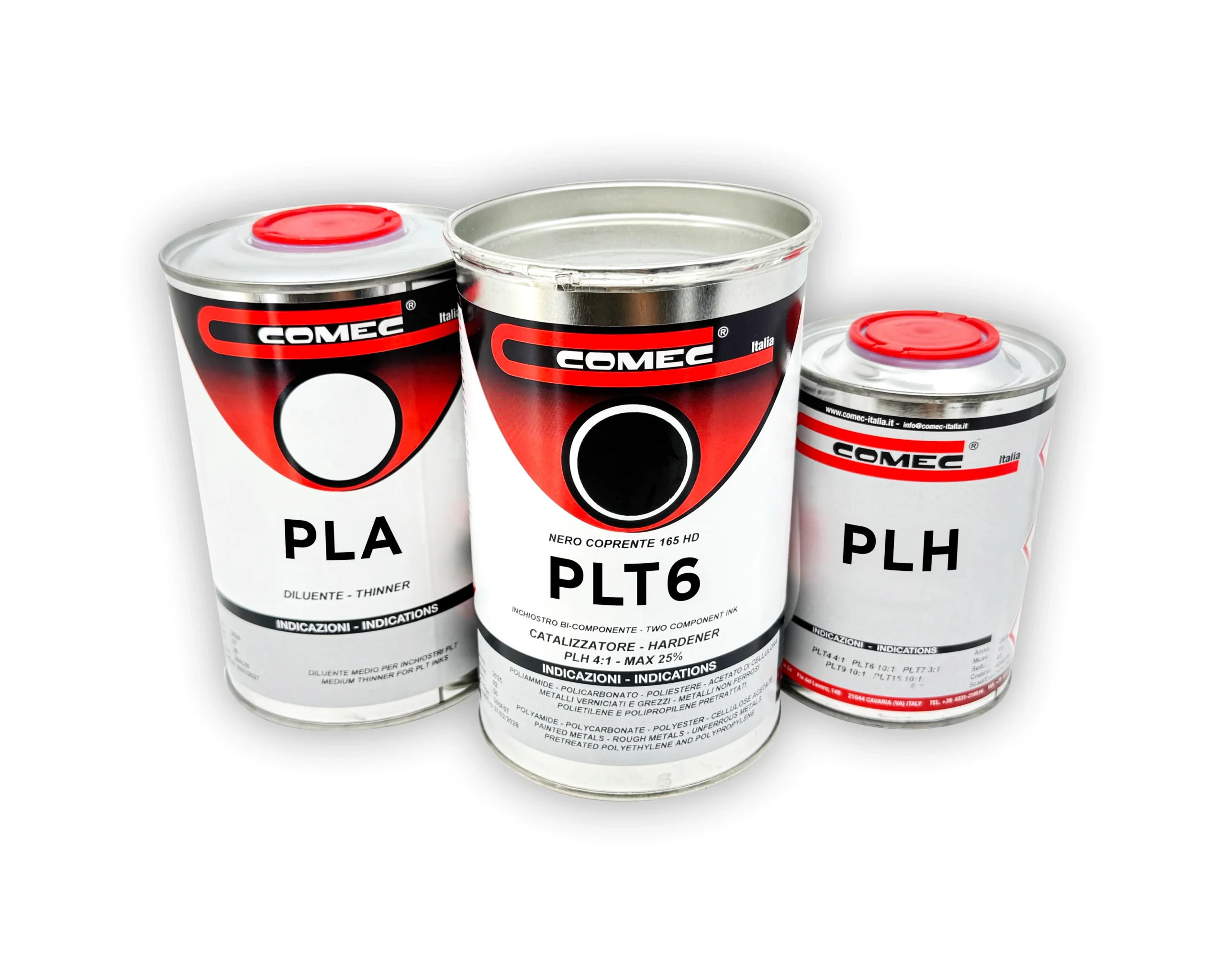
Matching the series to your product
The first step in evaluating Comec PLT6 Pad Printing Ink is to identify the actual substrate. Do not decide by product name alone without knowing the plastic type, metal coating or textile structure. Prepare a sample with the production substrate and record any surface treatment.
Technical data notes
Material names, ratios and times in this section are preserved from the series technical records. Do not transfer an additive ratio to another series; read each ratio together with the adjacent product code and operating conditions.
| PRODUCT SERIES | PLT6 |
|---|---|
| INK TYPE | Single-Component |
| PRINTING METHOD | Pad Printing |
| PRODUCT GROUP | Comec |
| General Properties | Single-component ink that can also be used as a two-component system. · pad printing inks comply with (EC) EN 71.3 and European Directive 2002/95/EC (RoHS). |
| Pad Printing Ink Applications | Lastik · Polyurethane · Polyamid · Fabric · Substratlar (esnek) · Plastik malzemeler · PVC |
| Colour Range | 24 standard colour options. · The COMEC colour range includes 22 standard opaque colours and CMYK colours. |
| Mechanical and Chemical Resistance | Excellent adhesion to the materials listed above. · Two-component use improves mechanical and chemical resistance and substrate adhesion. · Do not use on products exposed to ultraviolet light for long periods. |
| Drying and Curing Properties | Dries in 1-2 minutes at an ambient temperature of 20°C. · For drying within seconds, use hot-air circulation ovens (60-80°C) positioned over a rotary table or conveyor, or high-output spot heat sources (air or infrared). · The ink cures fully within 24 hours. |
| Preparation | Dilute and thoroughly mix the ink with 10-20% PLK thinner. · In warm conditions, when printing fine details or halftone images (e.g. 80-120 lines per cm), use some PLD retarder. · To improve mechanical and chemical resistance and substrate adhesion, use as a two-component system by adding special PLH hardener at 10:1 (10 parts ink, 1 part hardener). · Colours shown in the chart are representative. Request a sample for the actual colour. |
| Additives | PLH hardener · PLT6/70 clear varnish. |
Three separate decisions in sample preparation
| Substrate | Verify the material and any coating; do not select a series by product name alone. |
|---|---|
| Preparation | Match hardener, thinner and other additive codes to the series. Record the quantities used in the mixture. |
| Inspection timing | Plan initial appearance inspection separately from application durability testing. Drying and curing are different processes. |
Evaluate colour and durability separately
A sample close to the colour reference does not automatically meet application durability requirements. Record colour appearance, artwork clarity and required performance under use conditions as separate inspection headings. Label every sample with material details when testing the same series on different substrates.
Preparing for a technical discussion
- Comec PLT6 Pad Printing Ink product name and colour to be used
- Substrate raw material and coating information
- Pretreatment applied and production environment
- Required visual result and conditions the print will encounter in use